


In the realm of modern networking switches spare parts, the choice between SFP vs. QSFP Transceiver Cables plays a crucial role in determining network performance. As networks continue to evolve, understanding the differences between these two types of transceivers is essential for optimizing data transfer rates and overall network efficiency.
The SFP transceiver is a compact, hot-swappable module that supports a range of data rates, making it a versatile option for various network configurations. On the other hand, the QSFP transceiver offers higher data transfer rates, catering to the demands of high-bandwidth applications.
As we delve into the specifics of SFP vs. QSFP Transceiver Cables , it becomes clear that selecting the right transceiver cable is vital for achieving optimal network performance. This article aims to provide a comprehensive comparison of these two technologies, helping you make informed decisions for your networking needs.
Key Takeaways
- Understanding the differences between SFP and QSFP transceivers is crucial for network performance.
- SFP transceivers offer versatility for various network configurations.
- QSFP transceivers cater to high-bandwidth applications with higher data transfer rates.
- Choosing the right transceiver cable is vital for optimal network performance.
- SFP and QSFP transceivers have distinct advantages and applications.
Understanding Optical Transceivers in Modern Networks
The significance of optical transceivers in contemporary network infrastructure cannot be overstated. Optical transceivers are critical components that enable the transmission of data over optical networks.
The Role of Transceivers in Data Transmission
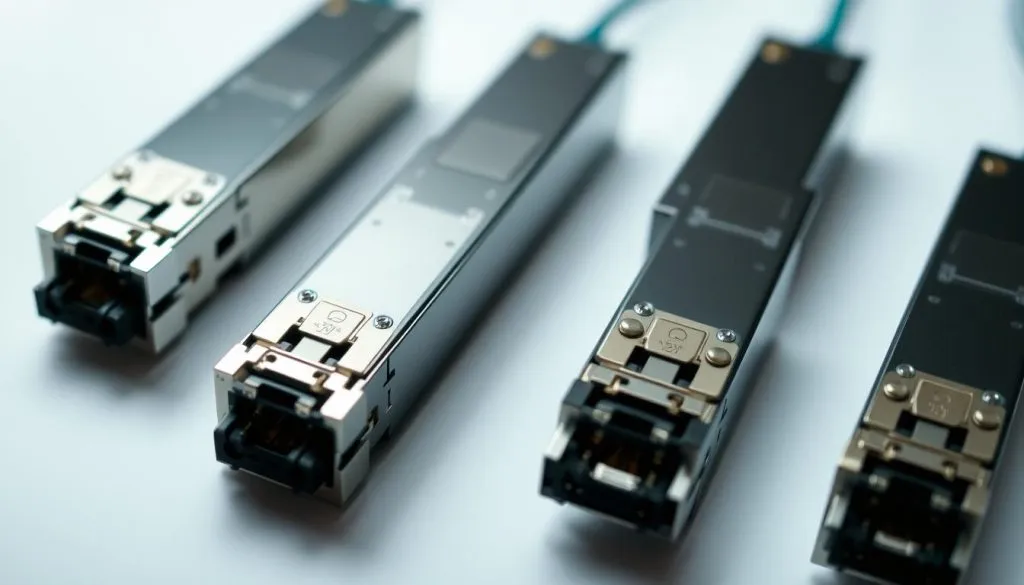
Optical transceivers play a vital role in converting electrical signals into light signals for transmission over fiber optic cables, and vice versa. This conversion process is essential for achieving high-speed data transfer in modern networks. The efficiency and reliability of optical transceivers directly impact the overall performance of the network.
Evolution of Optical Networking Technologies
Optical networking technologies have undergone significant advancements over the years. From the early days of simple optical connections to the current complex networks, optical networking has evolved to support higher speeds and greater capacities.
| Technology | Speed | Application |
|---|---|---|
| SFP | Up to 10 Gbps | Ethernet, Fibre Channel |
| QSFP | Up to 100 Gbps | High-density networking, data centers |
The evolution of optical transceivers has been driven by the need for faster and more reliable data transmission. As networks continue to grow and demand higher bandwidth, the development of new optical transceiver technologies will remain crucial.
What is SFP? Form Factor and Technical Specifications
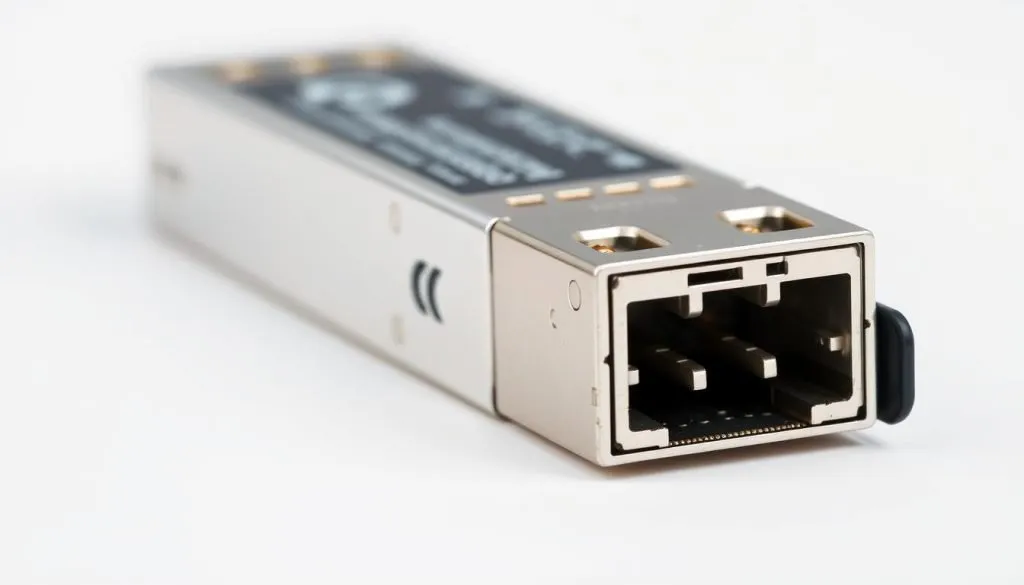
The Small Form-factor Pluggable (SFP) transceiver is a hot-swappable input/output device that provides a high-speed data link between network devices. SFP modules are widely used in telecommunications and data centers due to their compact size, flexibility, and ability to support various data rates.
SFP Design and Physical Characteristics
SFP transceivers are designed to be compact and efficient. They typically have a small form factor, allowing for high-density configurations in network equipment. The physical characteristics of SFP modules include a standardized size and a specific connector type, usually an LC connector for fiber optic connections.
SFP Standards and Generations
Over the years, SFP technology has evolved through several standards and generations, each offering improved performance and capabilities.
SFP vs. SFP+ vs. SFP28
The main differences between SFP, SFP+, and SFP28 lie in their data rates and bandwidth capabilities. Here’s a comparison:
| Standard | Data Rate | Bandwidth |
|---|---|---|
| SFP | Up to 1 Gbps | 1.25 Gbps |
| SFP+ | Up to 10 Gbps | 10.3125 Gbps |
| SFP28 | Up to 25 Gbps | 25.78125 Gbps |
As shown in the table, each successive generation of SFP technology has provided significant improvements in data rate and bandwidth, supporting the growing demands of modern networks.
“The evolution of SFP technology has been crucial in meeting the increasing bandwidth requirements of data centers and telecommunications networks.”
In conclusion, SFP transceivers are versatile and essential components in modern Dell networking switches , offering a range of capabilities and performance levels. Understanding the different standards and generations of SFP is crucial for selecting the right technology for specific network needs.
What is QSFP? Form Factor and Technical Specifications
The Quad Small Form-factor Pluggable (QSFP) transceiver is a significant advancement in optical networking technology, designed to meet the increasing demands for higher bandwidth and faster data transfer rates in data centers and telecommunications.
QSFP Design and Physical Characteristics
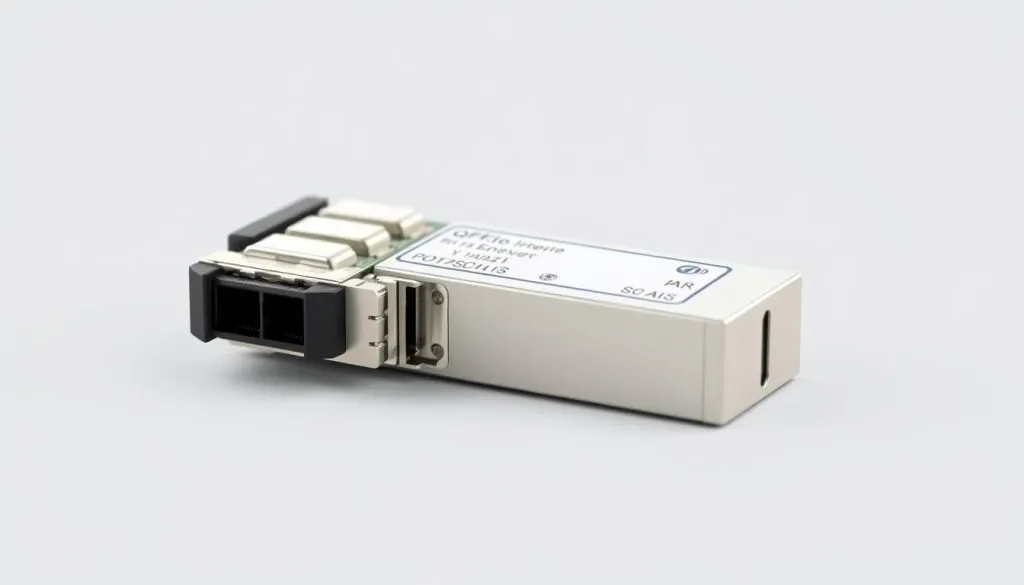
QSFP transceivers are engineered to be compact and highly efficient, allowing for high-density interconnect solutions. They typically support four lanes of data transmission, making them ideal for applications requiring high-bandwidth connectivity. The physical design of QSFP modules enables easy installation and removal, facilitating maintenance and upgrades in complex network infrastructures.
QSFP Standards and Generations
Over the years, QSFP technology has evolved through several generations, each offering improved performance and capabilities.
QSFP vs. QSFP+ vs. QSFP28 vs. QSFP-DD
The QSFP standards have progressed from the original QSFP to QSFP+, QSFP28, and more recently, QSFP-DD. Each generation has brought significant enhancements in data transfer rates:
- QSFP: Initially supported up to 4 Gbps per lane.
- QSFP+: Enhanced to support 10 Gbps per lane, totaling 40 Gbps.
- QSFP28: Further upgraded to 28 Gbps per lane, achieving 100 Gbps.
- QSFP-DD: Doubled the number of lanes to eight, enabling speeds of up to 400 Gbps.
| QSFP Generation | Speed per Lane | Total Bandwidth |
|---|---|---|
| QSFP | 4 Gbps | 16 Gbps |
| QSFP+ | 10 Gbps | 40 Gbps |
| QSFP28 | 28 Gbps | 100 Gbps |
| QSFP-DD | 50 Gbps (PAM4) | 400 Gbps |
As data centers and telecommunications networks continue to evolve, the demand for higher-speed interconnect solutions like QSFP transceivers is expected to grow. The advancements in QSFP technology have been pivotal in supporting the increasing bandwidth requirements of modern data-intensive applications.
SFP vs. QSFP Transceiver Cables : Key Differences for Network Performance
When it comes to network infrastructure, understanding the differences between SFP and QSFP transceiver cables is crucial for optimizing performance. Both types of transceivers play significant roles in modern networks, but they have distinct characteristics that impact network capabilities.
Form Factor Comparison
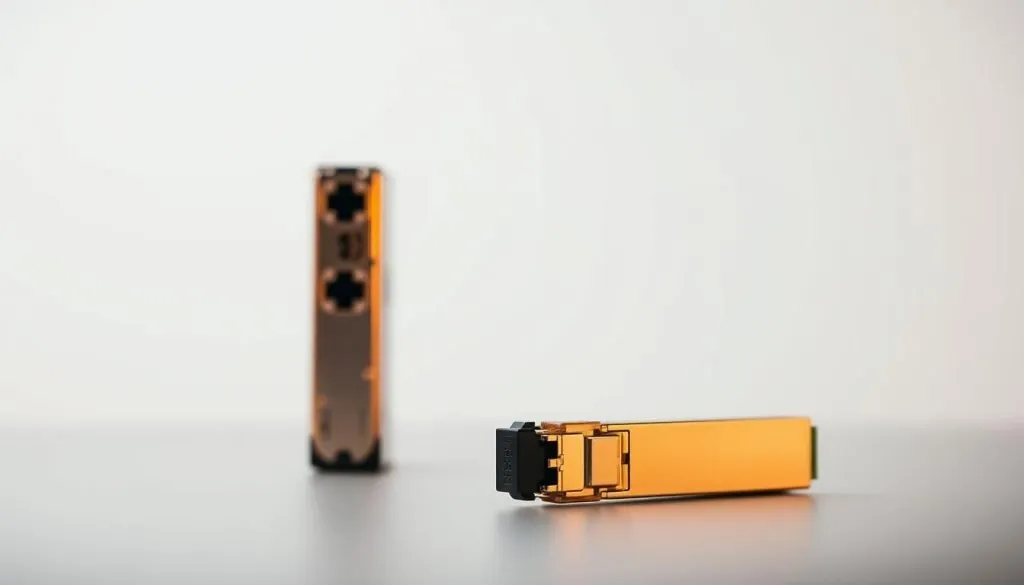
The form factor of a transceiver refers to its physical size and shape. SFP (Small Form-factor Pluggable) transceivers are smaller and more compact, making them ideal for environments where space is limited. In contrast, QSFP (Quad Small Form-factor Pluggable) transceivers are slightly larger and support higher data rates, making them suitable for applications requiring greater bandwidth.
Channel Capacity Differences
One of the primary differences between SFP and QSFP transceivers lies in their channel capacities. SFP transceivers typically support a single channel, whereas QSFP transceivers can handle four channels simultaneously, effectively quadrupling the data transfer rate. This makes QSFP transceivers more suitable for high-bandwidth applications such as data centers and high-performance computing.
| Feature | SFP | QSFP |
|---|---|---|
| Channel Capacity | 1 channel | 4 channels |
| Data Rate | Up to 1 Gbps (SFP), up to 25 Gbps (SFP28) | Up to 40 Gbps (QSFP+), up to 100 Gbps (QSFP28) |
| Power Consumption | Typically lower | Typically higher due to higher data rates |
Power Consumption Comparison
Power consumption is another critical factor when comparing SFP and QSFP transceivers. Generally, SFP transceivers consume less power compared to QSFP transceivers, which require more energy to support their higher data transfer rates. However, advancements in technology have led to more energy-efficient QSFP designs, narrowing the gap.
In conclusion, the choice between SFP and QSFP transceivers depends on the specific needs of the network. By understanding their differences in form factor, channel capacity, and power consumption, network administrators can make informed decisions to optimize their network performance.
Speed and Bandwidth Capabilities
SFP and QSFP transceivers are pivotal in modern network switches , offering different speed and bandwidth capabilities to meet diverse networking needs. The choice between these transceivers significantly impacts network performance and data transmission efficiency.
SFP Speed Ranges and Limitations
SFP transceivers support a range of speeds, typically from 100 Mbps to 10 Gbps. While they are versatile and widely used, their bandwidth is limited compared to QSFP transceivers. SFP modules are ideal for applications that don’t require extremely high data rates, such as Gigabit Ethernet connections.
QSFP Bandwidth Advantages
QSFP transceivers, on the other hand, offer significantly higher bandwidth, with data rates ranging from 40 Gbps to 400 Gbps. This makes QSFP modules suitable for high-density, high-bandwidth applications in data centers and high-performance computing environments.
Throughput Considerations for Different Network Sizes
When considering throughput, network size and requirements play a crucial role. For smaller networks with less demanding data transmission needs, SFP transceivers may suffice. However, larger networks or those anticipating significant growth may benefit from the higher bandwidth offered by QSFP transceivers.
In conclusion, understanding the speed and bandwidth capabilities of SFP and QSFP transceivers is essential for designing and optimizing network infrastructure. By choosing the appropriate transceiver type, network administrators can ensure optimal network performance and efficient data transmission.
Transmission Distance Capabilities
Understanding the transmission distance capabilities of SFP and QSFP transceivers is crucial for designing efficient fiber optic networks. The distance that these transceivers can effectively transmit data is a critical factor in network planning and implementation.
SFP Transmission Ranges
SFP transceivers are designed to support various transmission distances, ranging from short-reach connections within data centers to long-haul transmissions across metropolitan areas. Typically, SFP modules can transmit data up to 80 km over single-mode fiber. For example, single-mode SFP modules often have transmission ranges of up to 80 km, while multi-mode SFP modules are generally limited to 2 km or less, depending on the fiber type and quality.
QSFP Transmission Ranges
QSFP transceivers, being designed for higher data rates, also offer a range of transmission distances. QSFP modules can support transmission distances similar to SFP modules but are often used for shorter, high-bandwidth connections. For instance, QSFP28 modules are commonly used for 100G Ethernet connections over short to medium distances. Advanced QSFP modules can achieve longer distances, especially when used with technologies like Wavelength Division Multiplexing (WDM).
According to a study on data center interconnects, “QSFP modules have become the preferred choice for high-density, short-reach connections within data centers, offering superior bandwidth density” (Source: A Study on Data Center Interconnects, 2022).
Factors Affecting Maximum Distance
Several factors affect the maximum transmission distance of both SFP and QSFP transceivers. These include:
- Fiber type and quality
- Signal attenuation
- Dispersion characteristics
- Transceiver power budget
| Factor | Description | Impact on Distance |
|---|---|---|
| Fiber Type | Single-mode or multi-mode fiber | Single-mode supports longer distances |
| Signal Attenuation | Signal loss over distance | Higher attenuation reduces distance |
| Dispersion Characteristics | Signal spreading over distance | Higher dispersion reduces distance |
The table above summarizes the key factors affecting transmission distance. Understanding these factors is crucial for network designers to maximize the performance of their fiber optic networks.
Cable Types and Media Options
The choice of cable type is crucial for optimal network performance when using SFP or QSFP transceivers. The right cable can significantly enhance data transmission rates, reduce signal degradation, and improve overall network reliability.
Fiber Optic Options (Single-mode vs. Multi-mode)
Fiber optic cables are a popular choice for SFP and QSFP transceivers due to their high bandwidth and long-distance transmission capabilities. Single-mode fiber is ideal for long-haul connections, offering lower signal attenuation and higher data rates over longer distances. In contrast, multi-mode fiber is better suited for shorter distances, such as within data centers or campus networks, due to its larger core diameter and higher dispersion.
Copper Cable Options
Copper cables, including Direct Attach Copper (DAC) cables, are another option for SFP and QSFP transceivers. DAC cables are cost-effective and suitable for short-range connections within data centers. They offer high-speed data transmission with minimal latency. However, copper cables are generally limited by their shorter reach and susceptibility to electromagnetic interference.
Active vs. Passive Cable Considerations
When choosing between active and passive cables, it’s essential to consider the specific requirements of your network infrastructure. Active cables contain electronic components that boost the signal, enabling longer transmission distances and higher data rates. In contrast, passive cables rely on the transceiver’s signal strength and are typically used for shorter connections. The choice between active and passive cables depends on the specific needs of your network, including distance, data rate, and power consumption.
Port Density and Space Efficiency
In modern data centers, the density of network ports plays a crucial role in determining overall infrastructure efficiency. As the demand for higher bandwidth and faster data transfer rates continues to grow, network administrators are faced with the challenge of optimizing their infrastructure to accommodate these needs without compromising on space.
SFP Port Configuration in Network Equipment
SFP (Small Form-factor Pluggable) transceivers are widely used in network equipment due to their compact size and versatility. They offer a flexible solution for various network configurations, allowing for easy upgrades and changes as needed. However, the port density of SFP-based equipment can be limited compared to other form factors.
QSFP Port Density Advantages
QSFP (Quad Small Form-factor Pluggable) transceivers, on the other hand, offer a significant advantage when it comes to port density. By bundling four SFP channels into a single QSFP port, network equipment can achieve higher overall bandwidth and greater port density. This makes QSFP particularly suitable for high-density data center applications where maximizing space is critical.
Key benefits of QSFP include:
- Higher port density
- Increased bandwidth capacity
- Improved space efficiency
Space Considerations for Data Centers
Data centers are continually seeking ways to optimize their infrastructure to support growing demands for data processing and storage. The choice between SFP and QSFP transceivers can significantly impact the overall space efficiency of the data center. By leveraging QSFP transceivers, data centers can reduce the physical footprint of their network equipment, allowing for more efficient use of rack space and potentially lower operational costs.
Ultimately, the decision between SFP and QSFP configurations should be based on a thorough analysis of the specific needs and constraints of the data center. By understanding the trade-offs between port density, bandwidth, and space efficiency, network administrators can make informed decisions to optimize their infrastructure for future growth.
Cost Considerations: SFP vs. QSFP
The choice between SFP and QSFP transceivers significantly impacts network costs, from initial investment to long-term expenses. When planning network infrastructure upgrades or deployments, understanding these cost implications is crucial for making informed decisions.
Initial Investment Comparison
The initial cost of SFP and QSFP transceivers can vary significantly. Generally, SFP modules are less expensive upfront compared to QSFP transceivers. However, the overall initial investment also depends on the number of transceivers required to meet the network’s bandwidth needs. QSFP transceivers, despite being more costly per unit, can offer higher bandwidth, potentially reducing the total number of transceivers needed.
Long-term Operational Costs
Long-term operational costs, including power consumption and maintenance, also differ between SFP and QSFP transceivers. QSFP transceivers typically consume more power than SFP transceivers, which can increase electricity costs over time. However, their higher bandwidth capabilities might lead to more efficient network operations, potentially offsetting some of these costs.
Cost per Gigabit Analysis
When evaluating the cost per gigabit, QSFP transceivers often emerge as the more cost-effective option for high-bandwidth applications. Their ability to support higher data rates means that the cost per gigabit can be lower compared to SFP transceivers, especially in data-intensive environments. This analysis is critical for networks with high data demands, where the efficiency of QSFP can lead to significant cost savings.
In conclusion, while SFP transceivers may offer lower initial costs, QSFP transceivers can provide better value in the long run, particularly for networks requiring high bandwidth. A thorough cost analysis, considering both initial investment and long-term operational expenses, is essential for determining the most cost-effective solution for specific network infrastructure needs.
Implementation and Maintenance Best Practices
To ensure reliable data transmission, it’s essential to follow best practices for implementing and maintaining SFP and QSFP transceivers. Proper installation, thorough testing, and regular maintenance are critical for optimal network performance and longevity.
Installation Guidelines
When installing SFP and QSFP transceivers, it’s crucial to handle them with care to prevent damage. Ensure that the transceivers are compatible with the network equipment and that the correct type (SFP or QSFP) is used for the specific application. Follow the manufacturer’s instructions for installation, and make sure that the transceivers are securely seated in their ports.
Key installation steps include:
- Verifying compatibility between transceivers and network equipment
- Handling transceivers by the edges to prevent static damage
- Aligning transceivers properly with the port before insertion
- Securing transceivers firmly in place
Testing and Validation Procedures
After installation, thorough testing and validation are necessary to ensure that the SFP and QSFP transceivers are functioning correctly. Use appropriate testing tools to verify the integrity of the connection and the quality of the signal. Check for any signs of physical damage or misconfiguration.
| Test Type | Purpose | Tools Required |
|---|---|---|
| Optical Power Test | Measure signal strength | Optical Power Meter |
| Signal Integrity Test | Assess signal quality | Network Analyzer |
| BER (Bit Error Rate) Test | Evaluate data transmission accuracy | BER Tester |
Maintenance and Troubleshooting
Regular maintenance is essential for preventing issues and ensuring ongoing performance. This includes cleaning the transceivers and their ports, monitoring for signs of wear or damage, and performing firmware updates as necessary. When troubleshooting, start by checking the most common issues such as loose connections or misconfigurations.
Best practices for maintenance include:
- Regularly cleaning transceivers and ports
- Monitoring system logs for error messages
- Updating firmware to the latest versions
- Documenting all maintenance and troubleshooting activities
By following these implementation and maintenance best practices, network administrators can maximize the reliability and performance of their SFP and QSFP transceivers, ensuring a robust and efficient network infrastructure.
Compatibility and Interoperability Challenges
The integration of SFP and QSFP transceivers in modern networks poses significant compatibility and interoperability challenges. As networks evolve to support higher speeds and greater capacities, ensuring that different components work seamlessly together becomes increasingly complex.
Whether you’re using SFP or QSFP cables, investing in the best Cisco network switches guarantees stable connections and top-tier network efficiency.
Vendor-specific Considerations
One of the primary challenges in achieving interoperability is the variability in specifications and implementations across different vendors. While standards like those from IEEE and SFF Committee provide guidelines, vendors may have different interpretations or proprietary enhancements that can affect compatibility.
Key considerations for vendor-specific SFP and QSFP transceivers include:
- Checking for compliance with industry standards
- Verifying compatibility with existing network equipment
- Assessing the impact of proprietary features on interoperability
Cross-compatibility Between Different Generations
The rapid evolution of SFP and QSFP technologies means that networks often contain a mix of older and newer transceivers. Ensuring cross-compatibility between different generations is crucial for maintaining network performance and avoiding costly upgrades.
| Transceiver Type | Generation | Compatibility Notes |
|---|---|---|
| SFP | 1G | Compatible with most older network equipment |
| SFP+ | 10G | Backward compatible with SFP ports in some devices |
| QSFP+ | 40G | Not directly compatible with SFP or SFP+ ports |
| QSFP28 | 100G | Backward compatible with QSFP+ ports |
Troubleshooting Common Compatibility Issues
When compatibility issues arise, systematic troubleshooting is essential. Common steps include checking physical connections, verifying transceiver compatibility with network equipment, and updating firmware to the latest versions.
Effective troubleshooting practices involve:
- Monitoring network logs for error messages related to transceiver compatibility
- Using diagnostic tools to test transceiver functionality
- Consulting vendor documentation for specific compatibility guidelines
Network Infrastructure in Egypt: Market Trends and Considerations
As Egypt continues to modernize its network infrastructure, the role of SFP and QSFP transceivers becomes increasingly critical. The country’s telecommunications sector is witnessing a significant shift towards higher bandwidth and faster data transmission rates, driven by growing demand for data-intensive services.
Current Adoption Rates of SFP and QSFP in Egyptian Networks
The adoption of SFP and QSFP transceivers in Egypt is on the rise, with major telecommunications operators upgrading their infrastructure to support higher data rates. SFP transceivers are widely used for their flexibility and compatibility with various Fortinet network switches configurations. Meanwhile, QSFP transceivers are gaining traction for their high-density and high-speed capabilities, particularly in data centers and high-performance computing applications.
Local Availability and Support
The availability of SFP and QSFP transceivers in Egypt is improving, with several local distributors and system integrators offering a range of products from leading manufacturers. This local support is crucial for the timely deployment and maintenance of network infrastructure. Companies are also providing compatibility testing and certification services to ensure that the transceivers meet the required standards.
Regulatory Considerations for Egyptian Deployments
Egypt’s telecommunications regulatory environment is evolving to support the deployment of advanced network technologies. Regulatory bodies are working to streamline the approval process for new equipment, including SFP and QSFP transceivers. This includes ensuring compliance with international standards and implementing measures to enhance network security and reliability.
Use Cases and Applications
The selection between SFP and QSFP transceivers is crucial for optimizing network performance in diverse settings. Understanding the ideal use cases for each type is essential for network administrators and engineers to make informed decisions.
Ideal Scenarios for SFP Deployment
SFP transceivers are versatile and widely used in various network applications, particularly where lower to moderate bandwidth is required. They are ideal for connections that don’t demand the high-speed data transfer rates that QSFP modules offer.
Optimal QSFP Implementation Environments
QSFP transceivers are designed for high-density, high-bandwidth applications. They are particularly suited for data centers and high-performance computing environments where large amounts of data need to be transferred quickly.
Industry-specific Requirements
Different industries have unique requirements when it comes to network infrastructure. The choice between SFP and QSFP transceivers can significantly impact network efficiency and scalability.
Telecommunications
In telecommunications, the need for high-speed data transmission is ever-growing. QSFP transceivers are often preferred in core networks due to their high bandwidth capabilities.
Data Centers
Data centers benefit from QSFP transceivers due to their ability to handle high-volume data transfers. SFP transceivers, however, are still used for certain applications within data centers, especially where lower bandwidth is sufficient.
Enterprise Networks
Enterprise networks often utilize SFP transceivers for their flexibility and compatibility with a wide range of network equipment. QSFP transceivers are used in scenarios requiring higher bandwidth.
By understanding the specific needs of their network and the characteristics of SFP and QSFP transceivers, administrators can make informed decisions to optimize their infrastructure.
Conclusion
Choosing between SFP and QSFP transceiver cables is crucial for optimizing network performance. Throughout this article, we’ve explored the key differences between these two technologies, including their form factors, technical specifications, and applications.
SFP transceivers are ideal for smaller-scale networks or specific applications where lower data rates are sufficient. In contrast, QSFP transceivers offer higher bandwidth and faster data transfer rates, making them suitable for data centers and high-performance computing environments.
When deciding between SFP and QSFP, consider factors such as network size, required data transfer rates, and equipment compatibility. Understanding these differences is essential for designing and implementing efficient network infrastructures, particularly in regions like Egypt where network demands are growing.
By selecting the appropriate transceiver technology, network administrators can ensure optimal network performance, scalability, and reliability. The choice between SFP and QSFP ultimately depends on specific network requirements and future-proofing considerations.